

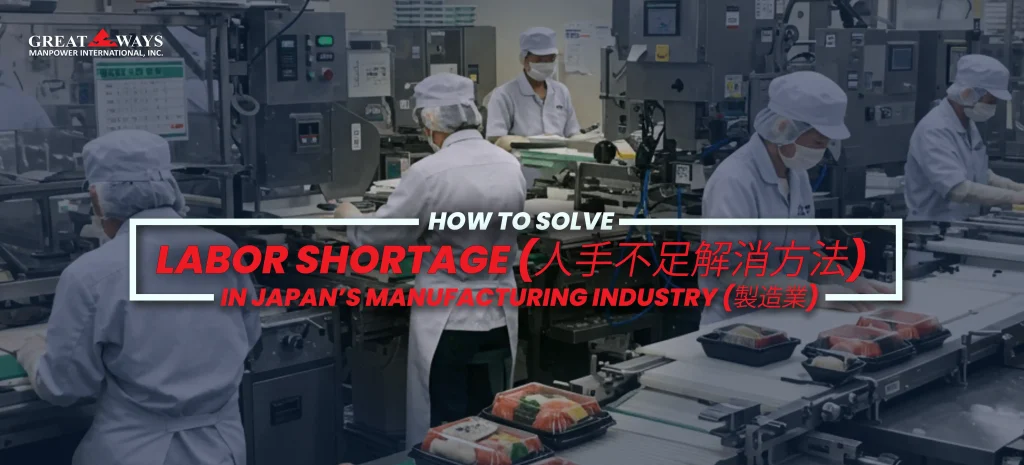
The growing labor shortage in Japan’s manufacturing industry is one of the major threats to productivity and profitability. For several years, Japan has been dealing with a shrinking working-age population. Even with 76% of women and 25% of seniors working, the country still struggles to meet its labor needs.

If you’re in Japan’s manufacturing industry, you already know how tough it is to find skilled workers right away. To stay ahead, you need to explore smarter and faster ways to attract and keep the right people in your team.
In this blog, we’ll walk you through practical tips to solve the labor shortage and keep your operations running smoothly. We’ve included a simple hiring checklist to help you build a strong team, whether through local hiring, foreign workers, or temporary staffing services.
Table of Contents
A Complete Step-by-Step Hiring Checklist for Manufacturers Dealing with Labor Shortage in Japan
STEP 1: IDENTIFY YOUR WORKFORCE NEEDS
STEP 2: CHOOSE LOCAL OR FOREIGN HIRING
STEP 3: PARTNER WITH AN ACCREDITED DISPATCH COMPANY
STEP 4: PREPARE CONTRACTS AND ONBOARDING ESSENTIALS
A Complete Step-by-Step Hiring Checklist for Manufacturers Dealing with Labor Shortage in Japan
STEP 1: IDENTIFY YOUR WORKFORCE NEEDS
Before hiring, clarify the exact workers you need. Start by answering these questions:
Checklist:
- What types of workers are you missing?
- Do you need full-time, part-time, or temp staff?
- What skills or certifications are needed?
- Does the role require Japanese language skills?
Having these answers makes it easier to choose whether to hire locally, use automation, or partner with a sending organization for overseas workers.
Solving Labor Shortage in Japan’s Service Industry with a Sending Organization
Explore how a sending organization helps solve the labor shortage in the service industry and supports foreign employment under TITP and SSW programs in Japan.
READ MORE
STEP 2: CHOOSE LOCAL OR FOREIGN HIRING
In many areas of Japan, local hiring is tough due to demographic shifts. Employers often can’t find enough workers in the local labor pool.
As a result, many companies are now hiring foreign workers, especially from the Philippines and other countries. Foreign hiring can help fill gaps quickly and reliably.
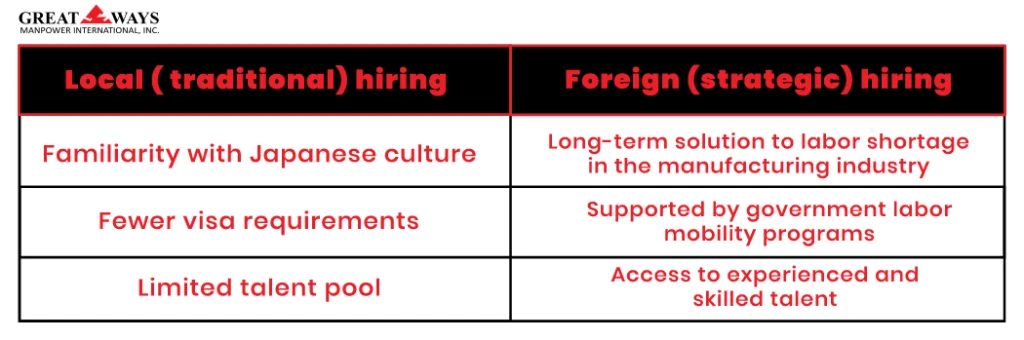
Helpful tip: Partner with a licensed dispatch company like Great Ways Manpower International to make sure hiring is legal and compliant under Japan’s visa programs, like TITP and SSW.
STEP 3: PARTNER WITH AN ACCREDITED DISPATCH COMPANY
Working with a certified human resource dispatch company can simplify your hiring process. The right partner screens candidates, checks qualifications, and ensures legal compliance.
Before you sign an agreement, check these:
- The company is DMW-accredited and follows Japanese labor guidelines.
- They can show proof of skills tests and background checks for workers.
- The partner offers post-deployment support in the manufacturing industry to help overseas workers adjust.
This makes your hiring more reliable and reduces risk.
STEP 4: PREPARE CONTRACTS AND ONBOARDING ESSENTIALS
Good onboarding builds trust and reduces unnecessary downtime in the manufacturing process due to communication gaps and poor deployment. It also helps new staff start work smoothly.
Checklist for onboarding:
- Create clear employment contracts that follow labor rules.
- Arrange housing and insurance before workers arrive.
- Give a work orientation and safety briefing.
- Explain roles, expectations, and shift schedules clearly.

Dispatch Services in Japan’s Manufacturing Industry: A Strategic Guide for Recruitment Managers
Discover how you can utilize dispatch services to solve labor shortages, reduce costs, and boost productivity in Japan.
READ MORESTEP 5: REDUCE TURNOVER AND KEEP TALENT
Once workers are on board, focus on keeping them. High turnover makes labor shortages worse over time.
Ways to keep staff longer:
- Offer language support and cultural orientation.
- Encourage teamwork between local and foreign workers.
- Set up mentorship programs to train and support staff.
- Monitor worker feedback and satisfaction regularly.
These simple additions can help you retain talent and avoid constant rehiring.
Conclusion
Labor shortages can slow down manufacturing. But with good planning and the right hiring support, you can fill your workforce faster.
Start by defining your needs, choosing the best hiring path, and preparing clear contracts and onboarding. Then focus on worker retention.
If you want help filling your staffing needs more quickly and compliantly, Great Ways Manpower International offers dispatch services tailored for Japan’s manufacturing industry.
Looking to hire skilled Filipino workers for your manufacturing operations in Japan?
Streamline your recruitment process and overcome labor shortage in the manufacturing industry with Great Ways Manpower International, your trusted dispatch partner in foreign employment and labor solutions.
SOLVE LABOR SHORTAGE WITH GREATWAYS
 English
 日本語
日本語 Polski
 العربية